Temples
Phnom Chhgnok
Overview
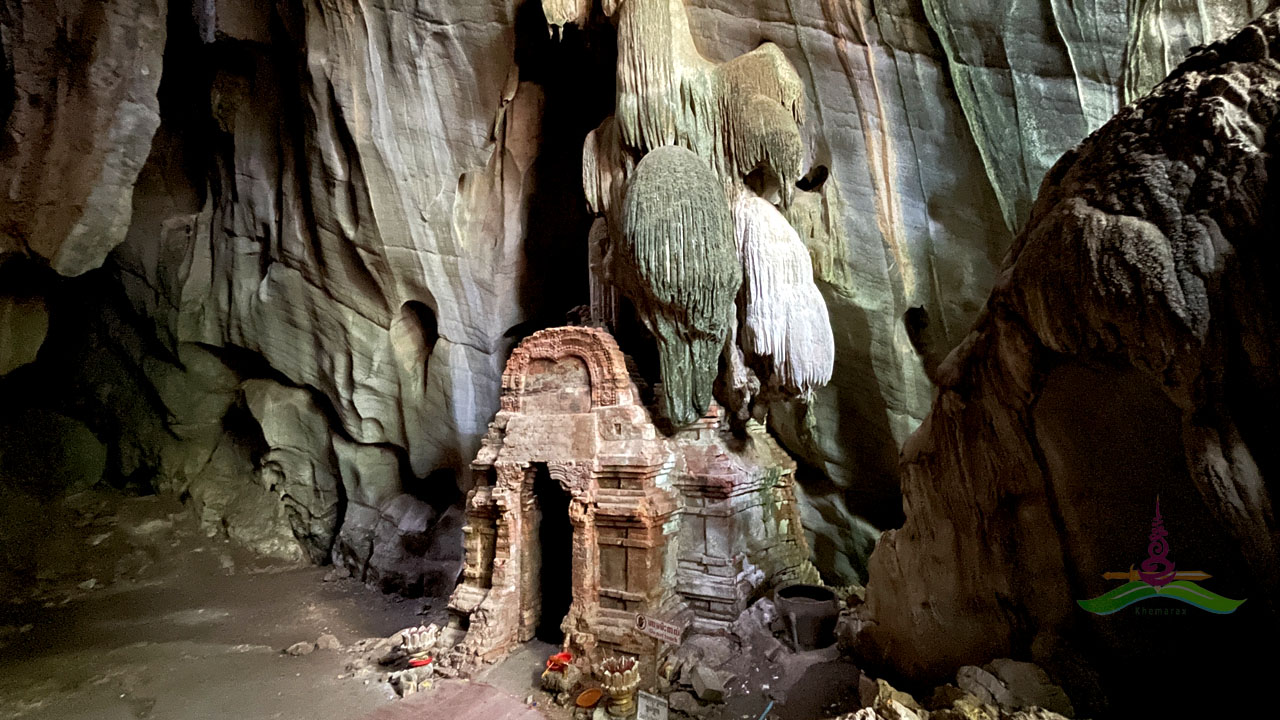
Phnom Chhngok (ភ្នំឈ្ងោក) in Kampot Province is one of Cambodia's most remarkable Funan/Chenla-era historical sites, seamlessly blending natural geological formations with early Khmer sacred architecture. The site is set inside a dramatic limestone mountain surrounded by lush rural scenery, rice fields, and pepper plantations.A staircase of roughly 203 steps leads up the hillside and down into a vast subterranean cavern. High above the brick sanctuary, massive stalactites hang from the cave roof. A prominent stalactite/stalagmite formation near the shrine naturally resembles the head of an elephant (Ganesha), which local tradition associates with sacred protective symbolism. The small brick sanctuary inside the cave dates to the 6th to 7th century AD (Funan transition to early Chenla period), spanning the eras from Rudravarman (the last king of Funan, reigning in the 6th century) through Bhavavarman I, Mahendravarman, Isanavarman I, and into the reign of Jayavarman I (late 7th century). Built of exposed red brick without mortar, the sanctuary features characteristic early Khmer architectural elements, including a simple square layout, pilasters, and decorative false doors. Preserved within the sheltered cavern, the sanctuary remains remarkably intact compared to outdoor brick temples of the same antiquity.
The sanctuary was constructed directly around a natural stalagmite serving as a self-manifested (svayambhu) Shiva Linga. An inscription associated with the site designates the deity as Śrī Utpannesvara ("The Lord who has Arisen/Manifested Naturally"), emphasizing Shiva's presence arising directly out of the Earth inside the mountain. Beyond its archaeological importance, local villagers continue to use the cavern as an active place of worship and reverence.
See more attractions
Bayon faces
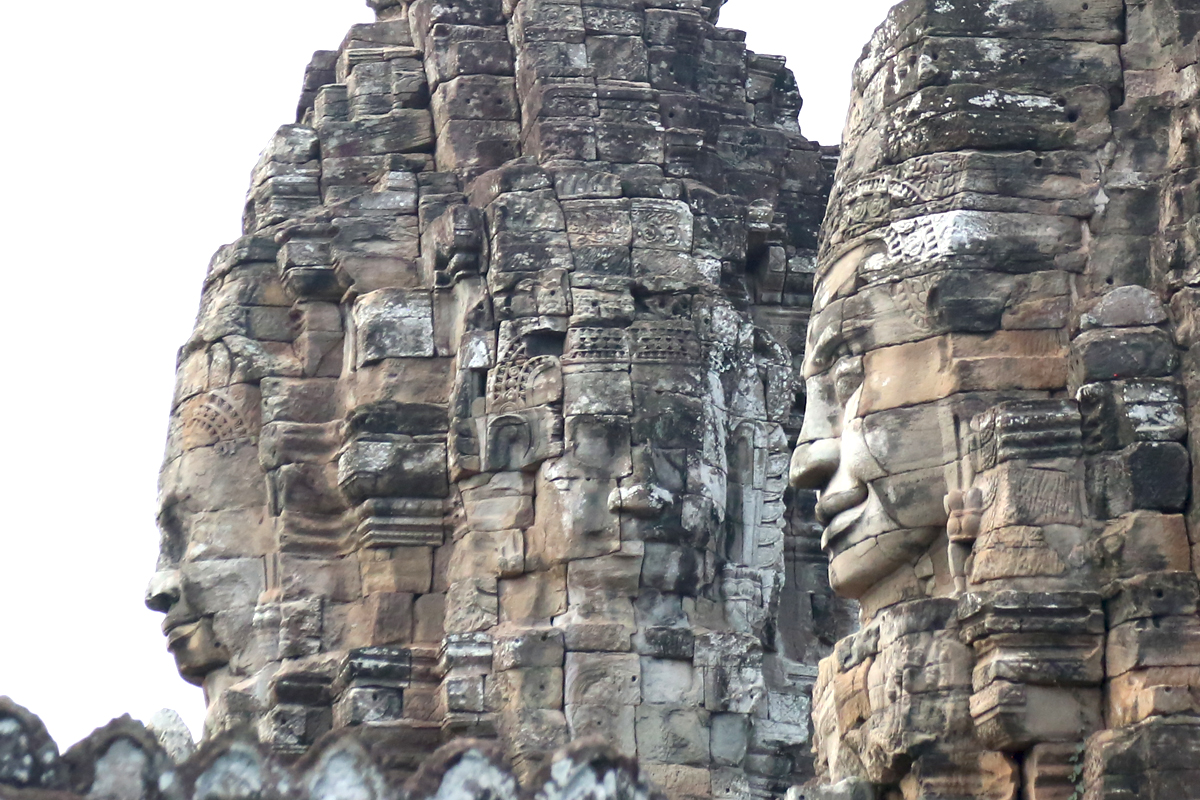
The monumental face towers of Bayon Temple stand as the primary icon of late 12th-century Khmer art and state theology. Built during the reign of King Jayavarman VII, these giant stone faces synthesize royal authority, esoteric Tantric protection, and Pure Land Buddhist cosmology into a single architectural monument.
Angkor Wat
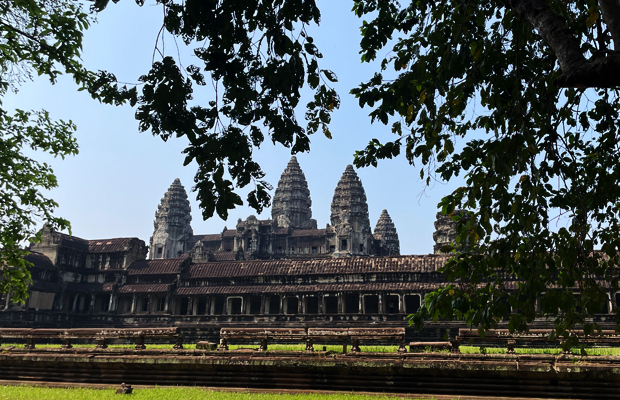
Angkor wat is one of 40 principal temples in Angkor archeological park. It becomes the national emblem of Cambodia as shown in the middle part of Cambodian national flag. Constructed from 1113 AD until 1150 AD on 163 hectares, Angkor Wat is the biggest religious edifice in the world. Not only its amazing dimension, this Hindu god’s residence stores plenty of ancient information through the style of architecture, the iconography and the inscription as well. Since it’s under the Hindu influence, Angkor Wat, built during the king Suryavarman II, inspired the doctrines of the Hindu cosmology, its astrology and so exalted by the mythology. Each measure of length and width follows the duration of Yuga or Mahayuga. For example, the distance of causeway crossing the moat at the west entrance measures 432 cubits (Hath or Arm) which relates to 432 000 years of Kaliyuga.
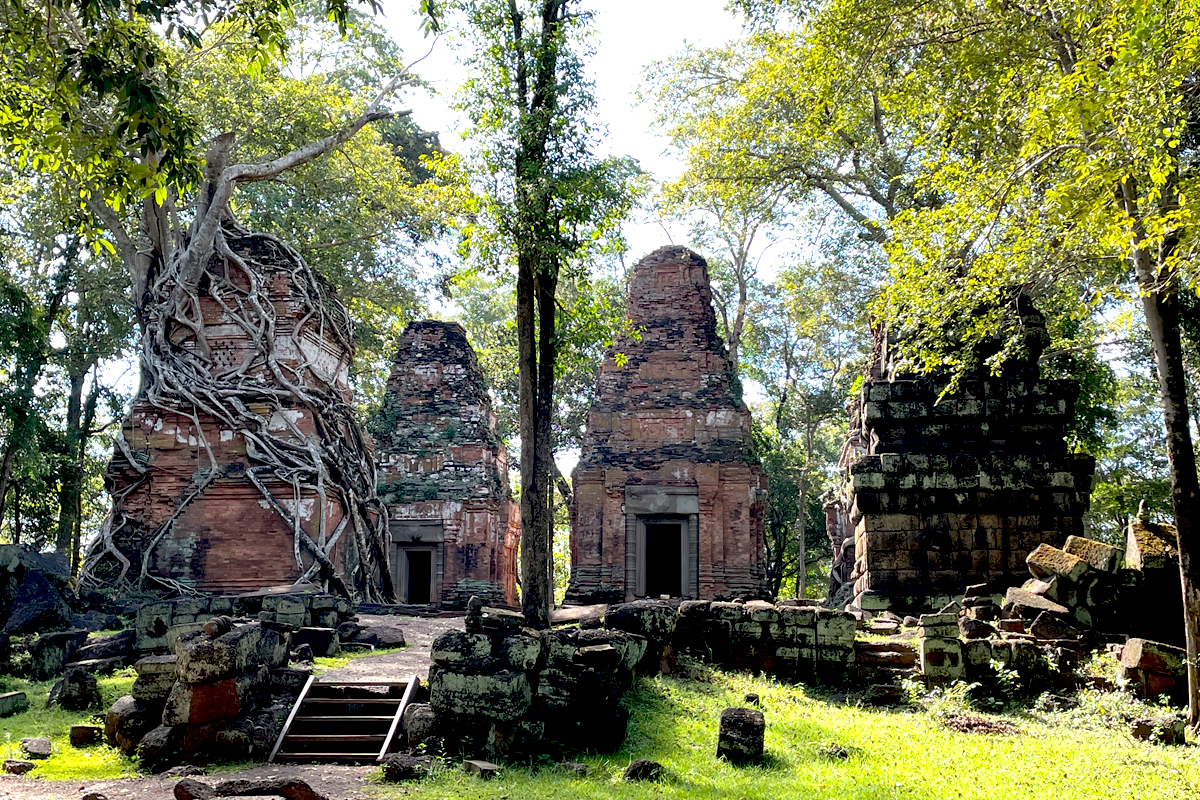
Prasat Pram
Prasat Pram is one of the hundreds of religious shrines at the Koh Ker site, which extends over 81 square kilometers. This brick structure, consisting of five edifices, was built in the mid-tenth century by King Jayavarman IV and is dedicated to Lord Vishnu. Its location is situated to the south of Prasat Thom, the main temple with a pyramid shape in the center of Lingapura, the city of Shivalinga. Prasat Pram served as a satellite temple, similar to other temples like Prasat Linga in Koh Ker.
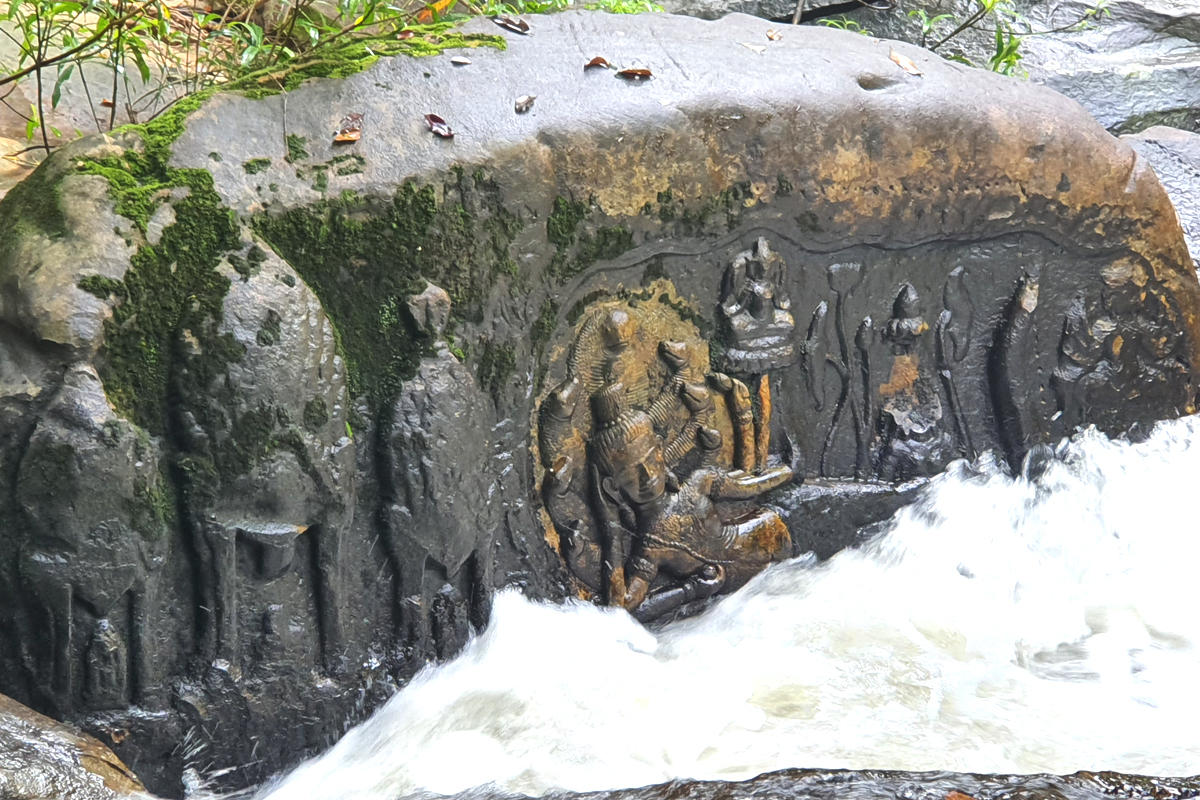
Kbal Spean
Kbal Spean is an open-air riverbed sanctuary where intricate reliefs were carved directly into the natural sandstone bedrock and boulders of the Stung Kbal Spean River. The carving of the site began during the reign of King Suryavarman I in the 11th century and was completed under King Udayadityavarman II. The riverbed and banks feature hundreds of carved lingas (phallic representations of Shiva) arranged in grid patterns beneath the flowing water, along with depictions of yonis (the sacred feminine symbol). Reliefs depict Lord Shiva seated on his sacred bull, Nandi, alongside his consort Parvati. Reaching the carved riverbed requires an uphill hike through thick tropical jungle along a 1.5-kilometer forested trail. The name Kbal Spean translates to "Head of the Bridge," referring to a naturally formed sandstone rock arch span over the river. Nearby, a small seasonal waterfall flows over the carved stone during and immediately following the rainy season.